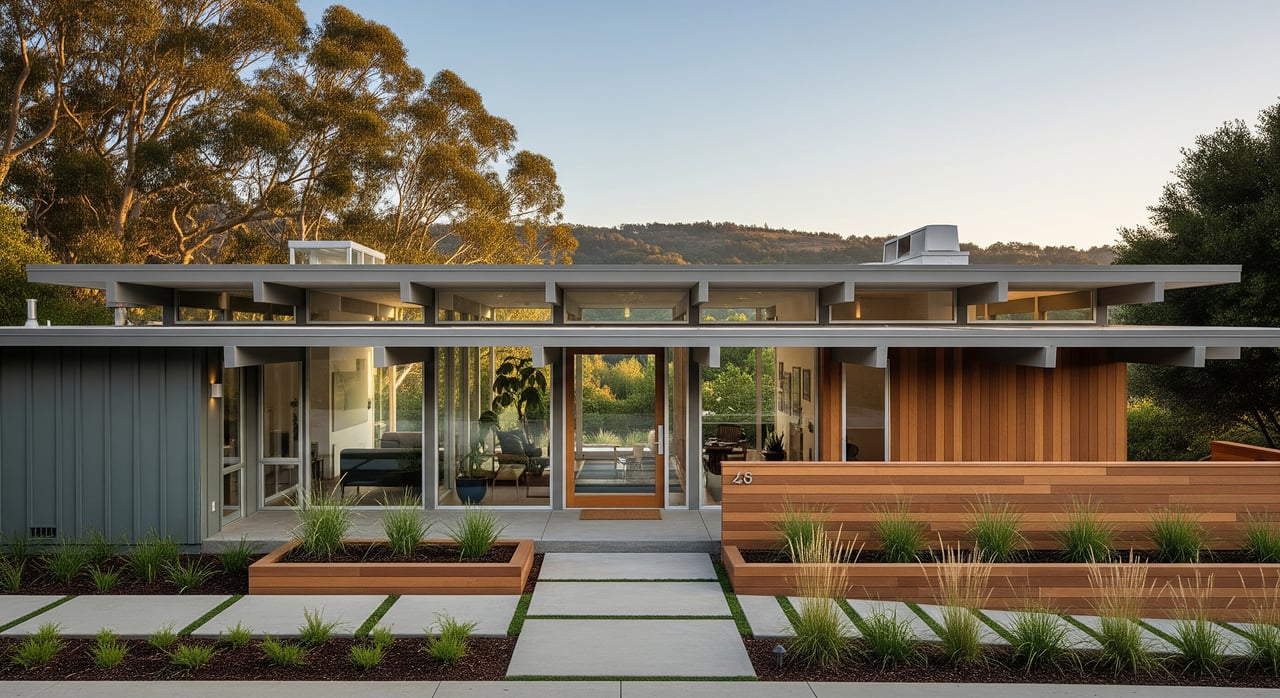
Love the glassy, indoor-outdoor homes in Terra Linda and Lucas Valley but not sure what makes an Eichler an Eichler? If you are buying, selling, or planning a thoughtful update, a little architectural fluency goes a long way. In this guide, you will learn the hallmarks of San Rafael’s Eichlers, common layout patterns, what to watch in inspections, and how to upgrade with care. Let’s dive in.
Eichler essentials in San Rafael
Joseph Eichler set out to bring modern design to everyday buyers, with open plans, indoor-outdoor flow, and honest materials. His company built roughly ten- to eleven-thousand homes across California, including notable pockets in San Rafael’s Terra Linda and Lucas Valley. Design firms such as A. Quincy Jones & Frederick Emmons and Anshen & Allen shaped many of the models you see today.
In San Rafael, these neighborhoods follow classic Eichler planning: single-story houses on relatively level lots, placed to connect living spaces to the yard. Before you renovate or add on, check with the City of San Rafael or Marin County planning and building offices for current permit and code requirements.
Core design vocabulary
- Post-and-beam structure: Exposed posts and beams carry the roof, which allows large glass walls and few interior load-bearing walls.
- Open plan: Living, dining, and kitchen areas read as one continuous space with long sightlines.
- Atrium: A small, walled courtyard that acts as a private outdoor room and organizing center.
- Floor-to-ceiling glass: Picture windows and sliding doors bring the outside in. Clerestory windows add daylight while protecting privacy.
- Carport integration: Many models use a carport instead of a full garage, keeping the roofline low and clean.
- Radiant slab heat: Original hydronic pipes are embedded in the concrete floor for even warmth.
- Built-ins and paneling: Birch or mahogany veneer, flush doors, and simple casework maintain a minimalist look.
- Low-slope roofs, wide eaves: Long horizontal lines, deep fascia, and generous overhangs define curb appeal.
Typical layouts and sizes
Most San Rafael Eichlers fall in the modest-to-moderate range, often about 1,000 to 2,200 square feet, depending on the model and any additions.
Common patterns include:
- Atrium-centered plans: Rooms wrap a central courtyard for light and privacy.
- Split bedroom wings: A bedroom wing sits apart from the main living zone for quiet and separation.
- Linear glass wall plans: Living, dining, and kitchen align along a glass wall facing the backyard.
- L-shaped homes: One wing holds the living areas, another holds bedrooms, framing the yard or atrium.
Original models typically offered 2 to 4 bedrooms and 1 to 2 baths. Many homes have gained extra baths over time. Second stories are uncommon in preservation-minded updates because they can disrupt the strong horizontal character.
Materials and systems
Exterior cladding often mixes vertical and horizontal wood siding with exposed fascia, which needs regular maintenance in Marin’s coastal climate. Original glazing is usually single-pane, including full-height sliders that define the architecture but perform poorly for heat and sound. Roofs are low-slope or shallow-pitched over tongue-and-groove or plywood decking, with wide eaves and careful fascia details.
Inside, you will find concrete slabs (often paired with radiant heat), built-in cabinetry, flush-panel doors, and minimal trim. Many original homes lack central air-conditioning. Today, owners often add cooling or convert to ductless heat pumps for efficiency without disrupting ceilings and walls.
Common issues in Marin
- Moisture intrusion: Atriums, roof penetrations, and deck transitions can leak without proper flashing and drainage.
- Wood rot: Eaves, fascia, and siding are vulnerable during rainy seasons and in coastal humidity.
- Aging glazing: Single-pane windows and sliders may leak air or fail at tracks and hardware.
- Electrical updates: Early wiring systems often need upgrades to meet modern code.
- Thermal performance: Low insulation levels and air leakage reduce comfort and efficiency.
Sensitive upgrade strategies
Thoughtful updates can boost comfort and safety while protecting character. Aim to keep the core features that make an Eichler special.
Preservation priorities
- Keep open sightlines. Avoid adding heavy partitions that break the flow.
- Retain glass walls and sliders when possible. If replacement is required, match sightlines, frame profiles, and track locations.
- Preserve the atrium and improve waterproofing rather than removing it.
- Match roof fascia profiles and eave depth during repairs or reroofing.
- Repair or replicate built-ins and plywood paneling with similar materials.
Systems upgrades
- Windows and doors: Prefer slimline double-glazing retrofits that keep original frames. If you must replace, choose custom low-profile frames that mirror the originals.
- Heating and cooling: If the radiant slab still works, maintain it. For efficient comfort, ductless mini-split heat pumps are a minimally invasive option.
- Insulation and air sealing: Add roof insulation during reroofing and seal penetrations. Where wall insulation is needed, use methods that protect interior paneling or insulate from the exterior during re-siding.
- Electrical and plumbing: Bring systems to code with concealed routing where feasible, and keep bathroom and kitchen footprints if you want to preserve character.
Additions with care
- Keep new work visually subordinate. Hold the original eave line as a guiding reference where possible.
- Avoid second stories that overpower the horizontal form. If you must add, set it back with lower rooflines and compatible geometry.
- Do not close off the atrium or major glass walls without careful design, since transparency is a defining feature.
Buyer and owner checklist
Use this quick list to guide decisions before you buy or renovate.
- Seek original plans or subdivision documents if available.
- Inspect atrium drainage, waterproofing, and roof transitions.
- Test slider operation and examine window frames for leaks or damage.
- Verify radiant slab condition and understand repair options.
- Review permits history for prior additions or systems changes.
- At contractor selection, prioritize experience with post-and-beam framing, large-format glazing, and hydronic systems.
- Confirm current permit, hazard, and energy-code requirements with the City of San Rafael or Marin County for your address.
Permits and local process
Rules and processes can change, so confirm current requirements with local authorities before work. In general, expect permits for window replacements, structural changes, mechanical upgrades, and significant roof work. Energy-code compliance is typical during major projects. If your home is in unincorporated Marin County, check county-level requirements in addition to city rules.
Living well in an Eichler
A San Rafael Eichler offers more than a place to live. It is a daily experience of light, privacy, and connection to the outdoors. When you understand the design intent and respect the details, you protect both comfort and value. With the right plan, you can honor the mid-century spirit while meeting today’s performance standards.
If you are considering a purchase, preparing a sale, or weighing upgrades before going to market, let’s talk about the smartest path for your goals. Connect with Scott Woods to align design, timing, and market strategy for your San Rafael Eichler.
FAQs
What defines an Eichler home in San Rafael?
- Open plans, post-and-beam structure, indoor-outdoor glass walls, atriums, low-slope roofs with wide eaves, and minimalist finishes are the core traits.
How energy efficient are original Eichlers?
- Original single-pane glazing and low insulation levels perform poorly by modern standards, so roof insulation, glazing retrofits, and ductless heat pumps help a lot.
Are atriums difficult to maintain in Marin’s climate?
- They can be if drainage, membranes, and flashing are not correct, so plan for proper slope to drains and careful waterproofing at walls and penetrations.
What should I inspect before buying an Eichler?
- Focus on atrium waterproofing, roof and fascia condition, slider and window operation, radiant slab function, and the permits history for any additions.
Can I add a second story to an Eichler?
- It is possible but rarely aligned with preservation goals; if pursued, it should be set back and designed to keep the original home’s horizontal character.